● Traditional digging introduces safety, utility, and cost risks through force-based excavation that lacks real-time visibility and control.
● Hydrovac excavation eliminates many excavation hazards by exposing underground features carefully, supporting accuracy, compliance, and safer working conditions.
● Creek Pipe Company, LLC delivers professional hydrovac services that prioritize infrastructure protection, worker safety, and reliable project execution.
Excavation has always carried an element of risk. From buried utilities to unstable soil conditions, the act of breaking ground introduces variables that can affect safety, budgets, schedules, and long-term infrastructure integrity. Traditional mechanical digging methods such as backhoes and trenchers remain common, yet they often expose projects to preventable hazards. Hydrovac excavation has emerged as a precise alternative that reshapes how subsurface work can be completed with greater confidence and control.
This article examines the most significant risks tied to conventional digging practices and explains how hydrovac technology addresses each concern with accuracy, care, and measurable improvements. The goal is to provide practical insight for contractors, engineers, municipalities, and property owners who want safer excavation outcomes supported by clear reasoning rather than surface-level claims.
The Inherent Uncertainty of Traditional Digging
Mechanical excavation relies on force. Steel buckets and blades penetrate soil without visual confirmation of what lies beneath. Even with site plans and utility markings, underground environments shift over time. Soil movement, undocumented repairs, and aging infrastructure create conditions where maps provide guidance yet lack certainty.
This uncertainty introduces stress for crews and supervisors. Operators often must choose between working slowly to reduce risk or moving quickly to meet timelines. Either option can create consequences. Slower progress increases labor costs, while faster excavation raises the likelihood of utility strikes, soil collapse, or equipment damage. Traditional digging places responsibility on judgment rather than verification.
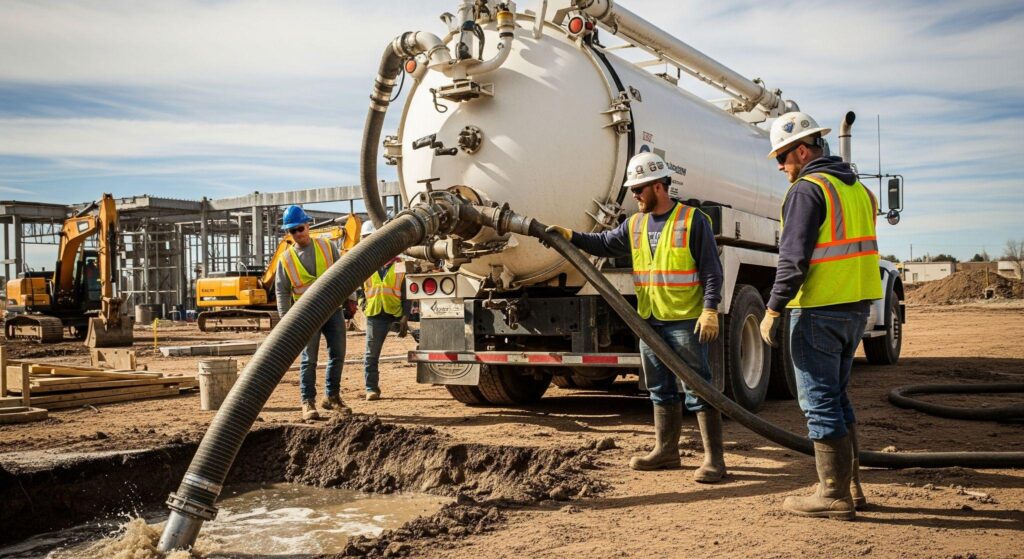
Hydrovac excavation replaces that uncertainty with controlled exposure. Pressurized water loosens soil while a powerful vacuum removes it, allowing operators to see and verify underground features as work progresses. The process transforms excavation from force-based
removal into informed discovery.
Utility Strikes and Service Disruptions
One of the most costly risks of mechanical digging involves accidental contact with underground utilities. Striking gas lines, electrical conduits, water mains, or communication cables can trigger service interruptions, emergency responses, and significant financial liability. Beyond repair expenses, these incidents often lead to project delays and reputational harm.
Traditional digging tools lack sensitivity. Even experienced operators may encounter shallow or unmarked lines that remain hidden until damage occurs. Cold weather exacerbates this issue by hardening soil, increasing the force required for excavation, and reducing control.
Hydrovac excavation minimizes these risks through non-destructive exposure. Water pressure can be adjusted to suit soil conditions while preserving the integrity of pipes and cables. As soil is removed gradually, crews identify utilities before contact occurs. This proactive visibility allows work to continue with informed decisions rather than reactive responses.
Worker Safety and Injury Prevention
Excavation-related injuries remain a serious concern within the construction and maintenance sectors. Cave-ins, equipment strikes, and unexpected utility releases place workers at risk of severe harm. Traditional digging often requires personnel to enter trenches or work close to heavy machinery, increasing exposure to danger.
Hydrovac methods enhance safety by reducing physical interaction with excavation zones. Operators can maintain distance while controlling the process from a secure position. The vacuum system removes loosened soil immediately, limiting the formation of unstable trench walls. This approach reduces the likelihood of sudden collapses that cause injuries.
Additionally, hydrovac excavation creates cleaner work sites. Reduced debris and clearer visibility help crews maintain situational awareness, supporting safer movement and coordination throughout the project area.
Environmental Impact and Site Preservation
Mechanical excavation disrupts large volumes of soil, vegetation, and surrounding structures. This disturbance can affect drainage patterns, root systems, and soil composition beyond the immediate work area. Restoration efforts often require extensive backfilling and compaction, adding time and cost to projects.
Hydrovac excavation focuses on precision. Only targeted soil is removed, leaving surrounding areas intact. This selective approach preserves soil stability and minimizes the footprint of excavation activities. Landscaped areas, paved surfaces, and sensitive environments benefit from reduced disruption.
For projects near waterways or protected zones, hydrovac methods offer a responsible alternative that aligns with environmental stewardship goals. Controlled excavation supports compliance with regulatory requirements while maintaining project efficiency.
Damage to Infrastructure and Equipment
Traditional digging can place stress on nearby structures through vibration and ground movement. Foundations, roadways, and adjacent utilities may experience shifting or cracking when heavy equipment operates in close proximity. Repairing these issues extends project timelines and increases costs.
Hydrovac excavation produces minimal vibration. The use of water to loosen soil eliminates the need for aggressive mechanical force. As a result, nearby infrastructure remains stable, reducing the likelihood of collateral damage. Equipment also benefits from reduced wear since vacuum systems encounter fewer obstructions compared to mechanical blades.
This protective effect contributes to long-term asset preservation for both public and private infrastructure owners.
Accuracy Challenges and Project Delays
Mechanical excavation often requires over-digging to locate targets accurately. This approach removes excess material, increasing restoration work and prolonging project completion. Inaccurate excavation also complicates inspections and approvals, leading to administrative delays.
Hydrovac excavation enhances accuracy through controlled exposure. Operators can uncover specific areas with exact depth and width requirements. This precision supports efficient inspections, faster approvals, and smoother project transitions between phases.
When accuracy improves, planning becomes more reliable. Project managers gain confidence
in timelines and resource allocation, reducing uncertainty across the entire operation.
Cost Implications Over the Project Lifecycle
At first glance, traditional digging may appear cost-effective due to lower equipment rental rates. However, hidden costs accumulate through repairs, downtime, safety incidents, and restoration work. Utility strikes alone can escalate budgets far beyond initial estimates.
Hydrovac excavation often demonstrates cost efficiency when evaluated across the full project lifecycle. Reduced risk of damage lowers repair expenses. Faster identification of underground features minimizes delays. Improved safety decreases workers’ compensation claims and
insurance premiums.
When projects are completed on schedule with fewer disruptions, stakeholders experience financial predictability and a stronger return on investment.
Cold Weather and Challenging Soil Conditions
Frozen ground presents a significant challenge for mechanical excavation. Hardened soil resists penetration, increasing equipment strain and limiting progress. Traditional methods may require pre-thawing or additional force, introducing further risk.
Hydrovac excavation excels in cold climates through the use of heated water. Warm water cuts through frozen soil effectively while maintaining precision. This capability extends the construction season and supports maintenance work during colder months.
Challenging soil types, such as clay or densely compacted fill, also respond well to hydrovac techniques. Controlled water pressure adapts to varying conditions, maintaining efficiency without sacrificing safety.
Regulatory Compliance and Documentation
Regulatory standards governing excavation emphasize safety, environmental protection, and utility preservation. Compliance requires accurate documentation and adherence to best practices. Mechanical excavation increases the likelihood of violations due to accidental damage or unsafe conditions.
Hydrovac excavation aligns with regulatory expectations through its non-destructive nature. Clear visibility of underground features supports accurate documentation and inspection readiness. Reduced incidents contribute to compliance records that reflect responsible operational practices.
For organizations operating across multiple jurisdictions, consistent compliance reduces administrative burden and supports long-term operational stability.
Community Impact and Public Perception
Excavation projects often occur within populated areas where residents and businesses
experience disruption. Noise, dust, and access restrictions can strain community relations.
Traditional digging amplifies these effects through larger equipment footprints and longer
restoration periods.
Smaller excavation zones and cleaner operations reduce noise and dust. Faster completion
restores access sooner, supporting positive community experiences.
Public perception matters. Projects completed with minimal impact strengthen trust between
contractors, municipalities, and residents, creating a foundation for future collaboration.
Strategic Advantages for Modern Projects
As infrastructure ages and urban density increases, excavation demands greater precision. Projects now require methods that balance efficiency with care. Hydrovac excavation offers strategic advantages by addressing traditional risks while supporting modern project requirements.
From utility maintenance to pipeline installation, hydrovac techniques adapt to diverse applications. The ability to excavate accurately within confined spaces expands project possibilities without compromising safety or quality.
Organizations that adopt hydrovac solutions position themselves as forward-thinking partners capable of delivering reliable results under complex conditions.
Choosing the Right Excavation Approach
Selecting an excavation method requires careful consideration of project goals, site conditions, and risk tolerance. Traditional digging may suit certain scenarios, yet its limitations become apparent in sensitive environments.
Hydrovac excavation provides an option grounded in precision and foresight. By reducing uncertainty and prioritizing safety, it addresses the core challenges that define excavation work. Decision makers who evaluate excavation methods through a risk-based lens often recognize
hydrovac technology as a valuable asset rather than an optional upgrade.
Conclusion
Excavation carries responsibility. Each decision influences safety, costs, environmental outcomes, and community trust. Traditional digging methods introduce risks rooted in force and uncertainty. Hydrovac excavation transforms that equation through controlled exposure and
informed action.
Understanding these differences empowers stakeholders to make choices that protect people, infrastructure, and project integrity. As excavation demands continue to evolve, hydrovac technology stands as a reliable solution that eliminates many of the long-standing risks associated with conventional digging practices.
At Creek Pipe Company, LLC, we provide hydrovac excavation solutions designed to protect infrastructure, crews, and project timelines. Contact the team to discuss upcoming excavation needs and explore how precise, non-destructive methods support safer and more reliable
project outcomes.